COLLIN PIPRELL Generating realities, exploring them, losing the thread.

3Feb/112

Writerly occupational hazards: Addictions, spinal deficiencies, and disciplinary infinite regresses

Posted by Collin Piprell


One writer, however much tongue in cheek, has actually expressed admiration for addicts:

I admire addicts. In a world where everybody is waiting for some blind, random disaster, or some sudden disease, the addict has the comfort of knowing what will most likely wait for him down the road. He's taken some control over his ultimate fate, and his addiction keeps the cause of death from being a total surprise.     ~ Chuck Palahniuk

Overall, though, even Palahniuk would probably concede that this advantage—a modicum of autonomy regarding the nature of your eventual passing (a half-assed sort of “suicide,” in plain terms)—is generally outweighed by a range of ill effects.

Traditionally, writers have too often succumbed to the temptations of drink, drugs and complicated women (or men). Among modern writers, however, the Internet threatens to become the biggest killer of creativity and real social lives. (Have a look, e.g., at Edward Tenner’s review in the Wilson Quarterly of recent books arguing two sides of the issue: The Shallows:
What the Internet Is Doing to Our Brains, by Nicholas Carr, and Cognitive Surplus:
Creativity and Generosity in a Connected Age,
by Clay Shirky.)

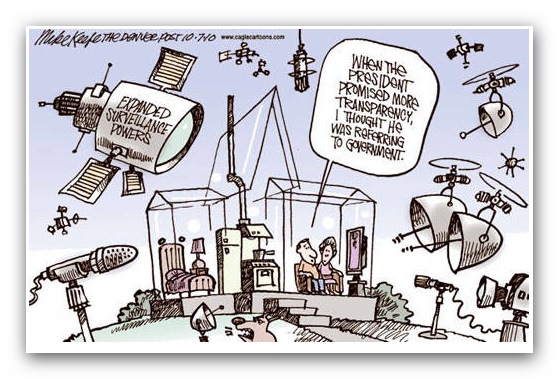
Online existence becomes ever-more seductive at the same time  concern grows at what harm it might be doing us. What isn’t at issue: In this brave new digital universe we inhabit, we tend to bathe our brains in a heady punch of dopamine (see, e.g., Psychology Today) and dangerous stress-induced chemicals (seen New York Times story). Parked there in front of your computer browsing the Web and answering e-mail, you can launch yourself on a fine gonzo adventure complete with “natural” uppers and downers and hangovers, not to mention disaffected better halves and everything.

My own Internet addiction has maybe left enough of a concentration span to compose haikus:


You have mail

Delivery vehicles,

Every e-mail

A dopamine fix.

Novels, on the other hand, require more attention. Unfortunately, my various projects mean I can't go cold turkey with the Internet, but I do need to find some way of disciplining myself. Something more effective than Sara's Rx.

"Just be more disciplined," she tells me.

Right.

I recently installed a program called Freedom, which is supposed to make discipline unnecessary. And it really works—you tell it how many hours you want to be independent of the Internet, and it forbids you access to all your communication programs for exactly that long. Plead and weep as much as you like; tell Freedom that Hollywood might be trying to e-mail you right now with an offer that expires in 20 minutes. There’s nothing you can do to change its mind. No recourse. Other than to go to your other computer, where you were careful not to install Freedom. Or simply refuse to activate Freedom. You may forget for months at a time, as I have, that you even have this program that set you back $15.

Now Sara tells me, “Just be more disciplined. Force yourself to activate Freedom every morning before you start your day.”

Right. But where do I find a program that activates Freedom automatically?

24Jan/110

Needed: iPhone “creativity meter” app

Posted by admin

Here’s one more way modern digital technology is making our lives worse.

In times past, I’d never leave the house without a little notebook in my pocket. The plastic jacket provided handy pockets for business cards. More importantly, meanwhile, the front of the diary served as a day planner, where I’d enter appointments and other reminders from front to back as far ahead as the future boded. The back of the book was where notes for posterity went—where in idle moments I’d record snatches of dialogue, local color, names for characters, outlines for stories, books I wanted to read, books I wanted to write and so on. In months when I felt like a real writer—when I tended to look at the world through eyes that saw more and saw it in new ways—back and front would meet in a “middle” that came far nearer the beginning of the diary than the end. In months when bread-and-butter work overwhelmed the fiction writer in me, that meeting of front and back came closer to the end. An excellent measure of how cozy the Muse and I’d been lately.

Recently I was going through an old pocket diary from 1997, back in my full-on freelancing days, and I found this note towards a character:

The pocket diaries were a barometer of how creative he’d been at any given time. This particular diary was a case in point. There was almost nothing in the back, the back section the skinnier for his being utterly distracted by commercial writing jobs. (When the fiction was really cooking, on the other hand, the backs filled up a lot faster than the front.) Of course, he had earned more that month than just about any other since he'd started this game.

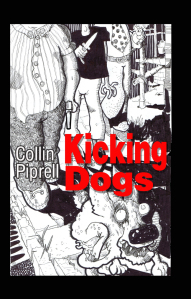
I was writing in the third person, but I was talking about me. (Just as with Kicking Dogs, though I was writing in the first person, I was talking about Jack Shackaway, a character who  camps on my blogsite from time to time and now claims it was really him who wrote Dogs and I’m nothing but a plagiarist).

In any case, modern gadgetry has pretty well spelled an end to my home-grown creativity meter. Now I carry an iPhone and, as often as not, a notebook computer, both with calendars and PAs. I’ll still have a sturdy wee paper notebook in my bag, but it tends to fill up over a year, instead of just a few weeks, while daily reminders and seeds of deathless literary efforts alike are scattered everywhere, so there’s no telling whether I’ve been in creative mode or not.

Not unless I have some actual stories finished, of course, which hasn’t been happening often enough of late.

11Nov/104

Digital bedlam

Posted by Collin Piprell

Yesterday I was riding the BTS here in Bangkok, when I noticed a guy standing in the corner of the car. What first caught my attention was his face, which was bathed in an unholy glow. Short of sleep as I was, my first thought was, yow, this is some kind of divine messenger, maybe sent by my dear, departed mother to have another go at finally setting me straight.

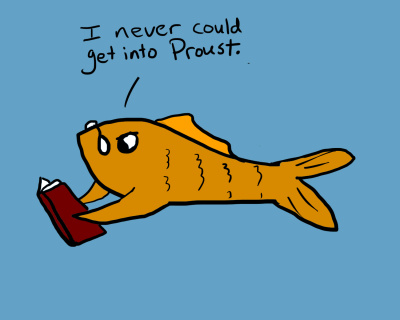
Then I realized the light came from the iPad he was holding in one hand. Whoa, I thought. This dude is right there on the leading edge, probably reading Proust at the same time he’s checking his e-mail and updating his blog.

Little did I know, because next I see he also has a live iPhone in his other hand, not to mention he’s wired to a set of headphones he maybe borrowed from a fighter pilot. No doubt he was digitally multi-tasking in ways lesser mortals such as myself couldn’t even guess at.

My point is that this vignette presents just one more harbinger of the future. Like the first time I opened the door to the loo in a local bar, probably more years ago than I want to think, and discovered one of the barmaids perched on the throne with a cell phone up against her head, this accessory so gloriously cool, back then, that it obviated any embarrassment at my intrusion. She merely sat up straighter and gave me a haughty look, never leaving off her conversation with her stockbroker in Tokyo or whatever. Yeah, and it seems like only yesterday I was boggling on the Skytrain listening to half a dozen different ringtones in concert or, even more recently, being taken aback to see otherwise apparently healthy people animatedly talking to themselves, missing a beat before I tumbled to the Bluetooth earphones. But all that’s already old hat, and has been since longer ago than yesterday. And all the signs—my radically wired Skytrain companion from yesterday, for one—point to even more radical changes on the near horizon.

In the meantime, here’s something from our virtual friend Leary, channeling from 55 years or so in the future:

When did everything first started beeping at us? By the turn of the 21st century, for sure, you had your mobile phones, your pagers, PDAs, alarm clocks, microwave stoves, car doors, car alarms, seat belts, energy conservers, even personal computers—PCs, we called ’em. Eventually, we had gosh knows what-all squawking and beeping and driving me, for one at least, crazy. My toilet -- my toilet, mind you -- beep-beeping away, telling me my blood sugar levels were elevated.

We invented a bunch of gadgets we mostly didn’t need and then fixed it so they could nag us to death, just as though we didn’t already have mothers and wives. Everything was pay attention to this; no, pay attention to that. Wait, what about me? My phone, your phone, incoming e-mail, step clear, the train’s coming, do up your safety belt, close the door, your coffee’s ready, you need to buy more eggs, the insulin pump has run dry, slow down, your heart is racing, and why wouldn’t it be, what with all the gadgetry niggling at you and you never get a minute’s peace and quiet?

They invented beeps scientifically designed to scratch our most basic anxieties, and they came up with long-life batteries so these things would never run down. It got so the whole darned world was one big alarm system. You’d get hit by a storm of beeps, and you’d have no real idea who was supposed to be alarmed or exactly why. All you knew was that something was ready or late or about to shut down, or blow up or something. Get up! Sit down! Duck! Get that cake out of the oven; change my battery; plug me in; talk to me; call me back; cheer up, for gosh sakes… Juststandbytillyouhearanotherfriggin’beep.

On top of all that, you had the music. Some of it, you didn’t know if you were listening to the top of the pops or whether all your appliances were rioting. And those citizens who weren’t on their phones were plugged into MP3 players instead, little portable music machines, their heads leaking music when their headphones weren’t on tight. There was no escaping it. You even got song birds imitating mobile ringtones. Darn it, we had a beeping mynah in our garden down Sukhumvit Road. “Run answer the bird,” my Ellie used to tell me. (That mynah’s part of the specs even here in our virtual Bangkok, though we specified nearly every other digital beep out of existence. Gosh. Just one more way that qubital realities are making our lives better.)

“Answer the bird, dear!”

Off the Mark” cartoon used with permission.

30Oct/100

No Christian, just a curmudgeon

Posted by Collin Piprell

My favorite song of the month is “St. Jerome the Thunderer,” by Dion. I’m not even a Christian, only a curmudgeon, yet I find this piece uplifting. Plus I can’t stop grinning every time I listen to it.

Yes, Dion is that same Dion DeMucci who recorded such ancient hits as “The Wanderer” (1961) and “I Wonder Why” (originally in 1958)—then and more recently). Now in his 70s, he rocks, totally—better than ever, an inspiration to anyone approaching old-crockdom, not me for example.

I’d recommend Son of Skip James. Hey, it’s so good I didn’t even pirate it. (Plus Dion must also be some kind of non-musical genius, because I couldn’t find this album anywhere online, aside from the Amazon store.)

Seems Dion based his lyrics for  “The Thunderer” on a poem by Phyllis McGinley. This will give you a hint of what to expect:

THE THUNDERER

God’s angry man,

His crotchety scholar

Was Saint Jerome,

The great name-caller

Who cared not a dime

For the laws of Libel

And in his spare time

Translated the Bible.

Quick to disparage

All joys but learning

Jerome thought marriage

Better than burning;

But didn’t like woman’s

Painted cheeks;

Didn’t like Romans,

Didn’t like Greeks,

Hated Pagans

For their Pagan ways,

Yet doted on Cicero all of his days.

A born reformer, cross and gifted,

He scolded mankind

Sterner than Swift did;

Worked to save

The world from the heathen;

Fled to a cave

For peace to breathe in,

Promptly wherewith

For miles around

He filled the air with

Fury and sound.

In a mighty prose

For Almighty ends,

He thrust at his foes,

Quarreled with his friends,

And served his Master,

Though with complaint.

He wasn’t a plaster sort of a saint.

But he swelled men’s minds

With a Christian leaven.

It takes all kinds 
to make a heaven.

By the way, here’s a link to another uplifter—the story of a pirated author who actually benefited as a result.

13Oct/100

Um… (attention-span failure)

Posted by admin

Kindle Singles. Score one for iPad enthusiasts. Soon there'll be no time to suffer the unfortunate effects of backlit screens. Kindles are better for extended reading? Yeah, well. Whatever.

Savage Chickens cartoon used with permission.

26Sep/100

Crack-crazed butterflies in rampant botanical garden

Posted by Collin Piprell

The future of the book

"Meet Nelson, Coupland, and Alice — the faces of tomorrow’s book. Watch global design and innovation consultancy IDEO’s vision for the future of the book. What new experiences might be created by linking diverse discussions, what additional value could be created by connected readers to one another, and what innovative ways we might use to tell our favorite stories and build community around books?"

1. Alice. To say I resemble a Ludditic old fart is too harsh, but I fear the “Alice”-type wave of the future will help to destroy both valuable reading habits and the commercial prospects for quality writing and publishing.

Okay, okay. I know. We’ve had thousands of years of whingeing ninnies who oppose technological innovation in information delivery. The doomsters see crisis at every turn. (Have a look at Neil Postman’s excellentTechnopoly: The Surrender of Culture to Technology, e.g., especially Chapter Four.) More than 2,600 years ago, e.g., Socrates warned that the written word itself would destroy our native memories. Yadda-yadda, eh? But the move from a oral to a written culture went on to bring great benefits.

Then, about 570 years ago, many considered the printing press socially and politically subversive. To some extent, these worries were justified. But few today would deny the manifest proven advantages of the written word and popularly accessible printed information.

Nevertheless, that doesn’t mean we can assume that change and novelty are in themselves somehow inevitably valuable. (Though many in our modern culture do. Our consumerist societies, it can be suggested, in fact depend on encouraging this already endemic attitude.) Biological evolution, e.g., is full of species that innovated themselves right out of luck. Brand-new features that seemed like a darned good idea in one context proved fatal to the whole species in another. Ask the dodo about the survival value of sauntering around the place all plump and congenial after Homo sapiens hits the beach. There’s no evidence that mutation and natural selection leads inevitably to more successful organisms. And there’s no more evidence that cultural and technological innovation necessarily means progress.

What are we left with when the novelty value of Alice wears off? My own attention already gets blown to bits by the demands of cell phone, e-mail, Facebook, a blog, this, that and the other. (See? The words elude me; multi-tasking and pathological levels of distraction have eaten my mind.) So I need books that have me flitting from place to place like a crack-crazed butterfly in some insanely efflorescent garden? I don’t think so.

2. Coupland. Then we’re given the genial, let’s-all-read-stuff-we-like-together-and-thereby-narrow-the-range-of-options Coupland literary current. (Can your e-book reader handle hypenated phrases of such grandeur?) This is something that may well carry us in directions opposite to those it promises.

Like a lot of other people, I’m finding myself swamped with things I feel I ought to read. I have a Kindle that already holds enough to keep me reading long after I’m dead of old age. I stand in danger of being crushed, here in my apartment, by avalanches of paper books that need reading or re-reading. Good friends lend me, as good friends will, new books every time they see me, no matter how much I tell them it may be my next turn on the Wheel before I get to read them. A long and growing list of favorite Internet sites tempt me daily with fascinating books, essays, articles and blogs, every one of these linked to many other interesting books, articles, videos and blogs. In short, I’m drowning in information, or at least in guilt at the ocean of information I feel I should somehow deal with.

Then along comes Coupland, offering to rationalize this maelstrom for me. Right. Now I can slip into reading groups where colleagues, fellow professionals, and social reading clubs list even more things I should really read or I’m not playing the requisite professional or social games. Whoa. Once again, virtual magic is just making my life better.

And I suspect this approach conceals a nasty authoritarian element. Too often we’ll feel compelled to at least skim or pretend to have read a lot of these booklists that precipitate around our work and and social lives, none of which we’ll have time for any more because we’re constantly browsing the magic digital mountain hoping to become truly engaged with some part of it, or else retreating into videos and games on our iPads, trying to dull the squirrely hysteria at all the informational goodies that need stashing.

3. Nelson. Judging by the comments on the site, there’s more tolerance for this approach, which could be useful for students and other researchers.

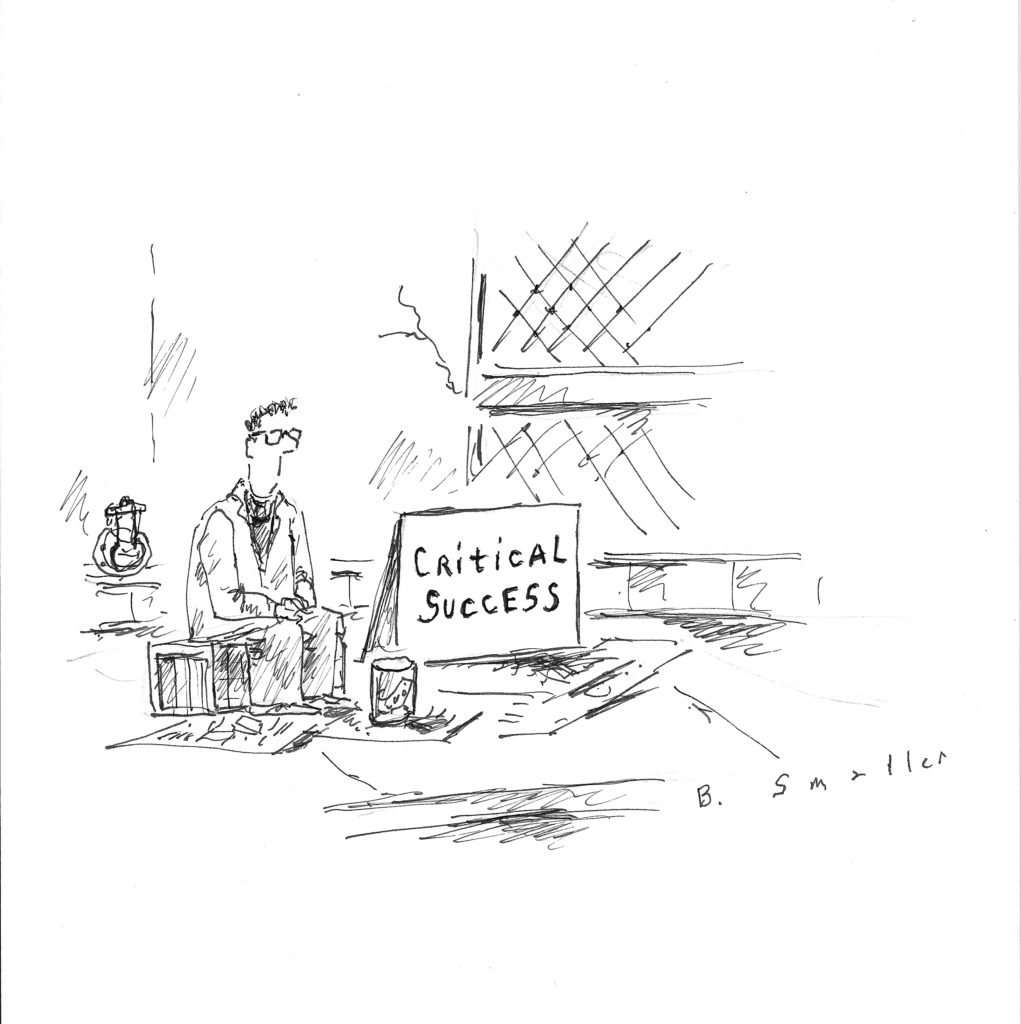
Whatever. Unless they’re already finanically secure one way or the other, writers are already doomed. For one thing, it’s being said, they need “platforms”—credible gangs of fans visiting their websites and blogs—or agents and publishers aren’t going to take them seriously. So there’s no time to write anyway, forget the issue of whether there’ll be any readers around to appreciate it.

I’m refraining from sauntering around looking plump and congenial, and I’m trying to discipline myself when it comes to the digital universe, but the barbarians are clearly at the gate, big time. And what am I doing? I’m sitting here, entirely distracted from the hard business of writing, wasting valuable time composing a post about being distracted.

Postmodern irony, or what? Sara claims it’s just bone-headedness.

Rx for the distracted writer.

12Aug/102

No iMac for me, no sirree.

Posted by Collin Piprell

I’m not going to buy the iMac. (See my earlier post 26 July: "Make yourself feel better and save $200,000 to boot".)

I recognize the syndrome. The world is going to hell all around me, and I haven’t won any literary prizes this week. My girl don’t love me and my chickens all ran away, not to mention my cotton won’t grow (© Mad Max iMac McGinty), and I sit here singing the blues and wondering what would make me feel better.

This is what leads grown suburbanite men to buy cabin cruisers and then park them in their driveways as a handy place to sit and drink beer with friends and wear their Tilly hats and talk about fishing. (Far lesser fits of existential angst merely leads Sara to go to a department store and buy a new blouse or skirt. Of course, this is a far lesser pressure on the budget, and a blouse at least keeps the chill off.)

What I’m saying is that the Mac-lust is merely a nearly universal human tendency, first of all, to want to leave some mark on the world—some tangible evidence we exist, a sign that says “I have passed this way.” It’s also a status thing, a bit like wolves pissing on the boundaries of their territory but arguably more polite. Most basically these days, however, it’s a symptom of the consumerist virus that infects the mind with insane urges to buy things that you don’t need. (Here’s an juliet schor interview2 - JCC that explores this syndrome in some detail.)

As the Lord Buddha, for one, clearly saw—this behavior will only leave you unhappy again, once the initial buzz wears off and you hear that some even fancier item is now available, and one of them even now rests with the Jones in the apartment next door. Yeah. Next thing you know there’s a new iMac that’s powerful enough you can use it to fly whole communities, maybe even the entire Tea Party, across vast interstellar distances to other galaxies. And you’ll just have to have this thing, even though all you’ll do with it is string words together and then change them around this way and that till you get tired of it. (That’s if you’re a wordsmith, which I claim to be.)

Just buy it, says Sara. Stop talking about it and buy it. It’ll be good for you.

And this, and that, but there’s no way I’m  going to buy the iMac, no matter how half-price it might be, and no matter how enormous the pile of money I’ll therefore save. Okay? Geez.

26Jul/105

Make yourself feel better & save $200,000 to boot

Posted by Collin Piprell

We’re afflicted, here in Bangkok, by an atmosphere of foreboding. The messy events of April-May might appear to be behind us. But this surface calm, in some ways, resembles a moonlit pool on a still night. You'd never suspect this pool is full of big sharks just waiting to erupt in a frenzy. All they need is for someone to toss them a nice chunk of something bloody. Yesterday's bomb was the mere slice of a dorsal fin, a wee tear in our tranquility. A harbinger, we hope not.

It’s hard to find even glimmers of optimism, no matter who you talk to. Same thing goes for the world economic situation, we've got these streets full of morose bears  carrying end-of-the-world placards. America's got huge problems, Europe too, and China's a disaster just waiting to happen, so where's your money going to run to? You hear talk of second jobs, retirement plans back on the shelf, no Lamborghini this year, never mind the BMW's all dusty. Nothing but hard times.

Anyway, Sara says just relax, okay? Things are what they are, and the future will bring some similar kettle of fish no matter how much I fret. So why fret? As usual, of course, she's right. She doesn't even charge me for all the advice. Only smiles, shakes her head, and wonders why I never take it.

The world's going to hell in a handbasket. So I ask myself, if I switch from PC to Mac, will everything be okay nevertheless?

My friend Bill, a mathemathically adept computer whiz and digital missionary, tells me that my whole life will change as soon as I move to Mac. “Nobody who has changed from a PC to a Mac has ever gone back again.” This wisdom has already enjoyed a long life on the street , and it's only part of his pitch.

Yeah, and not only that: he has a good friend who will sell me an iMac that's pretty well new—still under warranty. This item is so slick that Steve Jobs reportedly wants it back, not to mention NASA agents have been sniffing around making Bill's friend nervous, probably figuring this machine will help them put a man on Pluto. But he doesn't care if anybody ever puts a man on Pluto or not, and he'll let me have it instead. For about half price, he'll do this thing.

So I'd have to be crazy not to buy it, right? Think of all the money I'll save. What a deal, etc. Sara sees some wisdom in this, but she's a Thai woman, and a shopper. Plus she loves to see me screw up.

A new Lamborghini can cost $450,000. If somebody sold me a nearly new Roadster for half price, I'd save $200,000. Which is quite a lot of money. On the other hand, I'd need to come up with the other half, which would mean cutting back some on my Camembert and premium sencha tea. And all I need this Lamborghini for is driving to the corner store, which some people would claim is a waste of a good Lamborghini.

So what to do, eh?

But Bill looks at me, radiating the kind of certainty only competent mathematicians ever really muster, and he says, “Trust me. It’ll change your life.”

And something tells me he’s right.

Illustrations:

Thanks to pool shooter Michael McCafferty for the moonlit pool. h

11Jun/100

Spinning in our pre-graves rools, OK!

Posted by jack_shackaway

* PRE-OBITS. P.J. O’Rourke has recently suggested a way to help draw readers back to newspapers.


No industry in living memory has collapsed faster than daily print journalism,” he suggests. “You can still buy a buggy whip, which is more than can be said for a copy of the Rocky Mountain News, Cincinnati Post, or Seattle Post-Intelligencer.”

What's needed, he suggests, is a new kind of feature: “What I propose is “Pre-Obituaries”—official notices that certain people aren’t dead yet accompanied by brief summaries of their lives indicating why we wish they were. The main advantage of the Pre-Obit over the traditional obituary is the knowledge of reader and writer alike that the as-good-as-dead people are still around to have their feelings hurt.”

In that spirit, O'Rourke goes on to give us belated post-departure obits of iconic figures from Salinger to Ted Kennedy, Jimmy Carter and John Kenneth Galbraith, as well as to proffer still-living candidates worthy of pre-obits.

* AUTO-OBITS. Whatever. In the increasingly solipsistic, often narcissistic world of the Web and social networking, I believe we should go beyond O'Rourke's vision to auto-obits. That's right—we compose our own obituaries as we proceed towards our exit from this vale of sorrows. The way things are going, everybody's soon going to be a writer, authors one and all, but the question will often remain: What to write about?

That's where the auto-obit comes in. Just write about what a great guy you are.

JACK SHACKAWAY HAS BEEN A GREAT GUY!

I, for one, am going to write my own obituary, the way I'd want to be remembered. This route is loaded with potential for elevated self-esteem and suchlike, all without the dreary need to do anything else to merit the world's admiration. At the least, I can be remembered as a writer of obituaries par excellence. If I have any time left over, I can write a book: What to Do with Your Blog. (Check it out. Read that aloud—does it evoke a ghostly subtitle for you?)

Everybody a writer; everyone a blogger. Auto-obits our default program. Spin doctors seeking to heal ourselves, spinning the lives we would have wanted to live had we not whiled the buggers away blogging about our lives.

The way I'm doing at the moment. I think I'll go out, now, and drink red wine in the midday tropical sun. Yeah, that's what I'm gonna do. Stay posted for another book by yours truly: Creative Self-destruction: Why You Should Do Everything Your Momma Said You Shouldn't.

9Jun/107

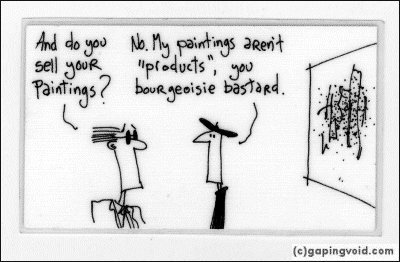
Blacksmiths & blockheads? “Payment and reserved copyright are at bottom the ruin of literature”

Posted by Collin Piprell

"No man but a blockhead ever wrote, except for money."
  (reported by Boswell, in his Life of Johnson)

Attributed to Samuel Johnson (1709-1784), the renowned author and lexicographer, that's one of the most famous writerly aphorisms in the English language.

Others have seen things differently.

Arthur Schopenhauer, for one (1788-1860), had this to say about the matter:

"There are above all two kinds of writer: those who write for the sake of what they have to say and those who write for the sake of writing. The former have had ideas or experiences which seem to them worth communicating; the latter need money and that is why they write—for money. They think for the purpose of writing. You can recognize them by the fact that they spin out their ideas to the greatest possible extent, that their ideas are half-true, obscure, forced and vacillating, and that they usually prefer the twilight so as to appear what they are not, which is why their writings lack definiteness and clarity. You can soon see they are writing simply in order to cover paper: and as soon as you do see it you should throw the book down, for time is precious. – Payment and reserved copyright are at bottom the ruin of literature. Only he who writes entirely for the sake of what he has to say writes anything worth writing. It is as if there were a curse on money: every writer writes badly as soon as he starts writing for gain. The greatest works of the greatest men all belong to a time when they had to write them for nothing or for very small payment: so that here too the Spanish proverb holds good: Honra y provecho no caben en un saco [Honour and money don’t belong in the same purse]." (Essays and Aphorisms, my highlight )

And whatever Johnson had to say about it, he himself wrote compulsively, prodigiously, and surely wouldn’t have done it only for the money. Nevertheless, in closing, we can give him the last word. When Sir John Hawkins suggested to Johnson that the very editing of Shakespeare had to be a satisfaction in itself, Johnson replied, "I look upon this as I did upon the Dictionary: it is all work, and my inducement to it is not love or desire of fame, but the want of money, which is the only motive to writing that I know of."
(Sir John Hawkins, The Life of Samuel Johnson)

Anyway, now Jack can relax and settle down to writing whatever it takes, and forget about the  novel. Maybe.

For my part, I'll just carry on writing, come what may, buyers or no buyers, readers or no readers. Maybe I'm a moron.

Another damned thick book! Always scribble, scribble, scribble! Eh, Mr. Gibbon?”

Attributed to Prince William Henry, Duke of Gloucester and Edinburgh, 1781, upon receiving the second (or third, or possibly both) volume(s) of The History of the Decline and Fall of the Roman Empire from the author. quoted by Sir Leslie Stephen in the Dictionary of National Biography, (1921), vol. 21, p. 1133. (Wikiquote)